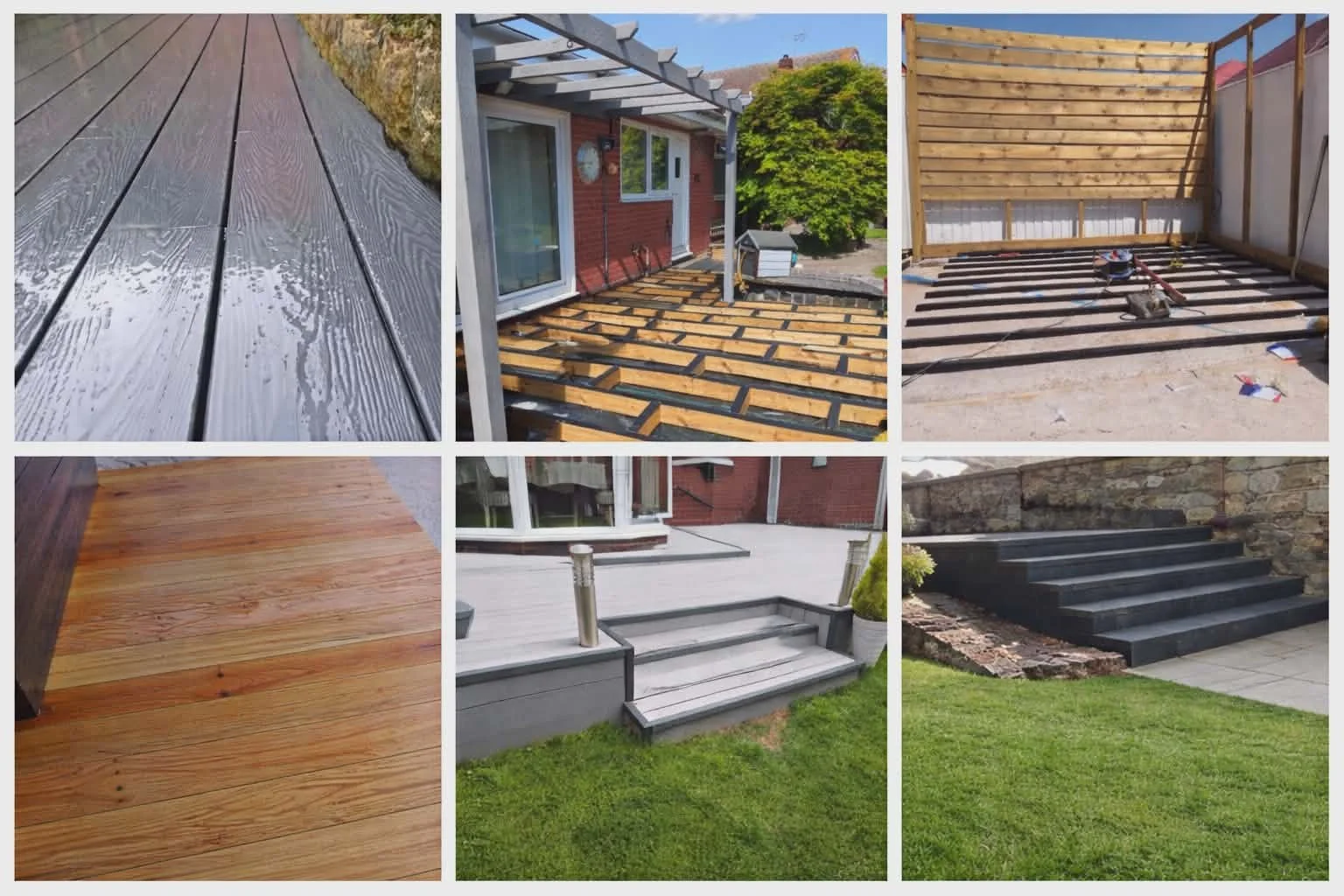
Decking Installation Options in Cheshire – Composite vs Timber
The pros and cons of garden decking
Across south Cheshire, we have seen decking installation to be a popular alternative to patios to add structure, warmth and usable outdoor space to a garden. When planned and installed properly, decking really can transform how a garden is used throughout the year. It’s visual and tactile contrast to patios mean they often work hand in hand, not necessarily either-or.
The two most common options homeowners consider are composite decking and timber decking, each with their own strengths.
For a naturalistic style garden, timber decking is great; like this example in Crewe. Where as, for a contemporary garden composite is perhaps a better option; on our experience, this is particularly popular in Sandbach.
Which ever option you go for, understanding the differences between these materials — and how they are installed — is essential to achieving a deck that performs well long term.
Composite decking – durability with minimal maintenance
Composite decking is often chosen for its low-maintenance appeal and consistent appearance. However, not all composite decking is the same. In our experience, quality varies significantly depending on materials, manufacturing methods and board construction. This is why we always recommend the ones with circle structures rather than rectangle structures within the board for their higher density of material thus greater resistance to UV rays of the sun
Construction of composite boards range from:
Plastic-based to bamboo-reinforced composites
Solid boards to hollow-core profiles
Products with very different resistance to colour fade, movement and temperature change
These differences directly affect lifespan, stability and how the decking performs in Cheshire’s variable climate. Choosing the right product — and installing it correctly — is critical. With decking more than perhaps anything, low price certainly is not best!
Timber decking – natural character and flexibility
Timber decking remains popular for homeowners who prefer a more natural, organic finish. When properly specified and installed, timber decking can age beautifully and complement planting-led garden designs. Timber decking is certainly higher maintenance than composite. You may like to consider larch and balau decking boards for their higher density and aesthetic value over the standard, treated softwood deck boards.
Which ever option you go for, timber does require careful consideration of:
Timber grade and treatment
Ventilation and drainage
Ongoing maintenance requirements
Professional decking installers ensure timber is installed with a 1:100 fall and secured to the subframe every 30cm on each board. Correct installation maximises longevity and minimise issues such as rot, movement and warping.
Why the subframe matters as much as the decking
One of the most overlooked aspects of decking installation is the subframe. Regardless of whether composite or timber boards are used, the structure beneath determines performance and lifespan.
Depending on location, height and ground conditions, decking subframes may involve:
Treated C24 timber or UC4-rated structural timber
Composite joists and bearers
Low-profile systems, plinths or adjustable pedestals
Concrete slab or blockwork
Timber posts
Different gardens require different solutions. A professional landscaping company will assess ground conditions, drainage and usage to ensure the decking structure is stable, ventilated and built to last.
The importance of professional decking installation
Decking installation isn’t just about fixing boards in place. Professional installation ensures:
Structural integrity and correct loading
Adequate ventilation beneath the deck
Safe detailing around edges, steps and level changes
Long-term reliability in Cheshire’s changing climate
For homeowners planning decking installation in Crewe, working with experienced installers helps avoid premature failure and ensures the finished space integrates seamlessly with the rest of the garden.
Written by Goodwin Gardens Ltd – professional decking installers for Crewe, Nantwich, Sandbach and Alsager / Stoke-on-Trent specialising in high-quality garden landscaping and outdoor spaces.
Discover more reasons to work with us here.